AI Technology Trends & Business Impact
🤖 AI Growth Is Accelerating in 2026: The Technology Boom Reshaping Business
Published: August 30, 2026
Category: AI & Technology | Business | Future Tech
Artificial intelligence is no longer just a futuristic technology. In 2026, AI has become one of the biggest drivers of investment, computing infrastructure, software development, cybersecurity and business transformation.
From record AI-chip demand to massive investments in data centers, the latest developments suggest that the AI economy is entering a new phase: AI is moving from experimentation to large-scale commercial deployment.
7
🚀 1. AI Infrastructure Is Growing at Extraordinary Speed
One of the clearest signals of AI's growth is the enormous demand for computing infrastructure.
Nvidia recently reported $96.22 billion in quarterly revenue, with its data-center business generating approximately $89 billion, more than double the previous year's level. Nvidia also forecast roughly 70% revenue growth for fiscal 2028, highlighting how strong demand for AI computing remains.
This means the AI boom isn't limited to chatbots.
It is creating demand for:
- 🖥️ AI servers
- ⚡ Data centers
- 🧠 AI processors
- ☁️ Cloud computing
- 🔌 High-speed networking
- 💾 Advanced memory
- ❄️ Data-center cooling systems
In other words, AI is creating an entire technology ecosystem.
🇮🇳 2. India Is Becoming a Major AI Market
India is also becoming an important part of the global AI infrastructure race.
Amazon has announced plans to invest $48 billion in India between 2026 and 2030, including an additional $13 billion for AI and cloud infrastructure.
This investment could accelerate India's development of:
Cloud infrastructure → AI applications → startups → enterprise adoption → new jobs
For Indian businesses, this could create opportunities in areas such as AI software, cloud services, cybersecurity, automation, analytics and AI-powered customer service.
6
🧠 3. AI Is Moving From Chatbots to AI Agents
The next major shift isn't simply better chatbots.
It's AI agents.
Instead of only answering a question, an AI agent can potentially:
- Understand a goal
- Plan multiple steps
- Use software tools
- Analyze information
- Complete tasks
- Report the result
For example, imagine telling an AI:
"Find potential customers for my business, analyze them and prepare a sales list."
Instead of simply giving advice, an AI-powered system could eventually handle much of that workflow automatically.
This could dramatically change:
- Sales
- Marketing
- Customer support
- Software development
- Research
- Finance
- E-commerce
- Business operations
🏢 4. Businesses Are Becoming AI-First
AI adoption is increasingly moving beyond technology companies.
Retailers, banks, manufacturers, professional services companies and startups are using AI for automation, personalization and decision-making.
The retail AI market is also expanding as e-commerce growth and demand for personalized experiences push businesses toward generative AI.
What can a small business use AI for?
Business AreaPossible AI Use
📢 Marketing
Generate campaigns & content
💬 Customer Support
AI chatbot
🎯 Sales
Lead qualification
📊 Analytics
Business insights
📸 Content
Images & videos
🔍 Search
Smart recommendations
⚙️ Operations
Workflow automation
🌐 Website
AI-powered assistance
This is particularly important for small businesses because AI can provide capabilities that previously required larger teams.
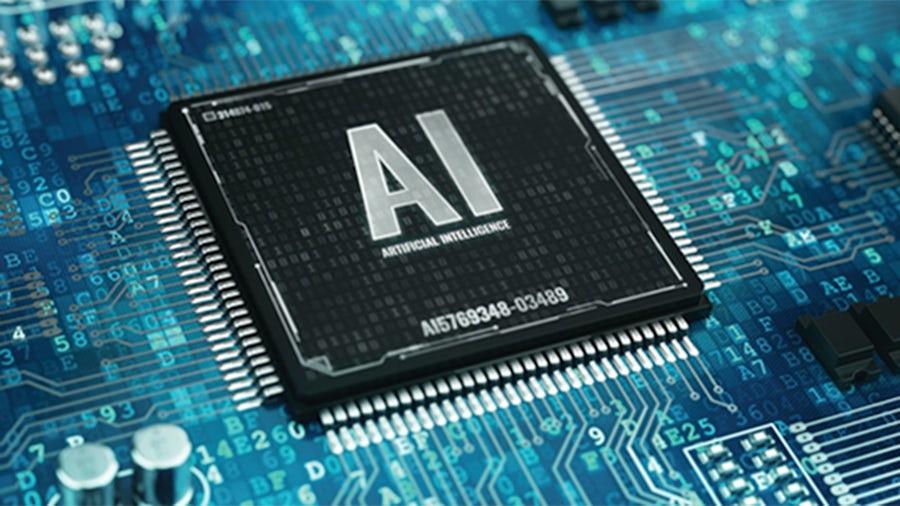
🖥️ 5. AI Chips Are Becoming Strategic
The AI revolution depends heavily on specialized hardware.
Companies are increasingly developing their own processors rather than relying entirely on third-party hardware. Recent reporting has highlighted efforts from major technology companies to develop custom AI chips, increasing competition across the AI semiconductor ecosystem.
6
The competition is becoming:
Better models + faster chips + cheaper inference + larger infrastructure
That combination could determine which companies lead the next stage of AI.
🔐 6. AI Growth Also Creates New Cybersecurity Risks
There is another side to the AI boom.
As AI systems become more capable, they can potentially be used by attackers to automate sophisticated cyber operations.
More than 100 technology companies and organizations recently warned about the growing AI-related cyber threat and called for stronger defenses.
Businesses therefore need to think about:
- 🔐 AI security
- 🛡️ Data protection
- 👤 Identity management
- 🚨 Fraud detection
- 🧪 Model security
- 📋 AI governance
The future isn't simply about building powerful AI.
It's about building powerful and trustworthy AI.
🌍 7. AI Is Becoming a Global Competition
Governments are also treating AI as strategic infrastructure.
Countries are investing in:
- AI research
- Data centers
- Semiconductor manufacturing
- AI education
- National AI strategies
- Cybersecurity
- AI regulation
For example, Canada launched a national AI strategy in June 2026 focused on expanding AI adoption and capability over the coming years.
This demonstrates how AI has moved beyond being purely a technology-company issue.
It is becoming an economic and national infrastructure priority.
📈 What Does This Mean for Entrepreneurs?
The biggest opportunity may not be creating the next giant AI model.
Instead, entrepreneurs can build AI-powered solutions for existing industries.
For example:
🏪 Local Businesses
AI-powered discovery, marketing and customer engagement.
🏥 Healthcare
Administrative automation and intelligent information systems.
🏠 Real Estate
Property matching and lead qualification.
👨💻 Freelancers
AI-assisted productivity and service delivery.
🛒 E-commerce
Personalized recommendations and automated customer support.
📞 Sales
Lead scoring, follow-ups and automated outreach.
The winning question isn't:
"How can I build AI?"
It is:
"What problem can AI solve better, faster or cheaper?"
🔮 What's Next?
The next few years could bring an even deeper integration of AI into everyday technology.
We are likely to see continued development in:
🤖 AI Agents
AI systems that perform multi-step tasks.
🦾 Physical AI & Robotics
AI moving from screens into robots, vehicles and machines.
💻 AI Coding
Software development becoming increasingly AI-assisted.
🧠 Smaller AI Models
More powerful models running efficiently on devices.
🏢 Enterprise AI
Businesses integrating AI into everyday workflows.
🔐 AI Security
Greater focus on protecting AI systems and data.
⚡ AI Infrastructure
Continued investment in chips, cloud platforms and data centers.
💡 The Bottom Line
AI growth in 2026 isn't just about chatbots becoming smarter.
It is about an entire technology ecosystem expanding around artificial intelligence.
AI chips → Data centers → Cloud → AI models → AI agents → Business applications → New industries
The companies that understand how to apply AI to real-world problems could have a major advantage in the coming years.
And for entrepreneurs, startups and small businesses, this may be one of the biggest technology opportunities of the decade.
🚀 What This Means for ZindBC
For platforms such as ZindBC, the AI opportunity is particularly interesting.
A modern business-discovery platform can combine:
Business Listings + Local Search + AI Discovery + Seller Visibility + Customer Enquiries
The future of business directories may therefore move beyond simply showing a list of businesses.
Instead, AI can help users find the right business faster while helping sellers become more discoverable to relevant customers.
That creates a powerful opportunity:
Businesses shouldn't just be listed online. They should be intelligently discovered.
Enjoyed this article?
Share it with your network